DIG Bhullar’s rise ends in controversy over ‘sewa paani’ row
From privilege to probe: Punjab DIG Harcharan Singh Bhullar faces downfall over ‘sewa paani’ case
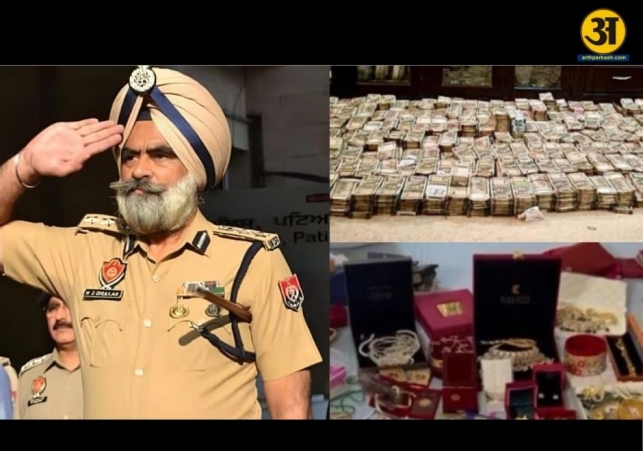
Punjab Deputy Inspector General (DIG) Harcharan Singh Bhullar, currently posted in Ropar, was arrested by the Central Bureau of Investigation (CBI) on Thursday for allegedly demanding an ₹8 lakh bribe from a scrap dealer. His arrest came as a shocking development in a career that spanned over three decades, marked by smooth promotions and influential postings. Bhullar’s rise in the Punjab Police was strongly influenced by his father’s legacy, political connections, and a privileged start in the force.
Bhullar joined the Punjab Police as a Deputy Superintendent of Police (DSP) in 1993 during the tenure of Chief Minister Beant Singh. His recruitment was made as a “special case” using special provisions, bypassing the usual method of selection through the Punjab Public Service Commission (PPSC) exam or promotion from within the police ranks. At the time, Bhullar’s father, Mehal Singh Bhullar, was the Inspector General (IG) heading the operations wing, playing a key role in combating terrorism in Punjab. His father later became Director General of Police (DGP) and was closely connected to the Congress leadership.
The Beant Singh government justified Harcharan Bhullar’s special recruitment as recognition of his father’s contributions during a critical period of Punjab’s history. This early advantage set the tone for his career, which was characterised by prestigious postings, rapid promotions, and friendly relations with successive governments.
Less than ten years after joining as DSP, Bhullar was promoted to Superintendent of Police (SP) in 2001. Even before this formal promotion, he served as SP in Mohali while still holding the DSP rank, at a time when his father was the state police chief. This unusual posting raised eyebrows among colleagues and the public. Over the years, he rose to the rank of Senior Superintendent of Police (SSP) and served as district head in multiple districts including Barnala, Jagraon, Fatehgarh Sahib, Gurdaspur, Ropar, and Mohali.
Colleagues describe Bhullar as “effective” and “pliable,” qualities that helped him maintain strong relations with different state governments, including Congress, Shiromani Akali Dal, and now the Aam Aadmi Party. During his tenure as Dera Bassi DSP, he faced allegations of harassment from a woman. The Punjab and Haryana High Court intervened and restrained him from entering Ropar district while the matter was under investigation.
Bhullar was promoted to DIG rank in 2023. He served as Zonal DIG for Patiala, overseeing law and order, and later in Ropar. He also led the Special Investigation Team (SIT) investigating drug smuggling cases involving Shiromani Akali Dal leader Bikram Singh Majithia. Bhullar’s younger brother, Kuldeep Singh Bhullar, is a Congress leader based in Patiala, adding to the political connections within the family.
His arrest by the CBI at this stage of his career marks a rare occurrence where a senior Punjab Police officer has been held by a central agency on corruption charges. Bhullar was scheduled to be promoted to Inspector General (IG) next year and was due to retire in October 2026. The bribery allegations and subsequent arrest abruptly ended a largely unblemished career built on legacy, privilege, and political ties.
Influence of family and political connections
Harcharan Bhullar’s career is closely linked to his father’s reputation and influence. Mehal Singh Bhullar was a prominent police officer during Punjab’s fight against terrorism, and his standing with political leaders helped Harcharan secure a special recruitment as DSP. This gave him a head start compared to other recruits, enabling him to access key postings and faster promotions.
ALSO READ: Taliban-linked TTP leader Noor Wali Mehsud fuels border tensions
ALSO READ: Kashmir voters face disappointment after high expectations
Throughout his career, Bhullar benefited from his ability to adapt to changing political scenarios. His good relations with successive state governments helped him maintain an unchallenged trajectory in the police hierarchy. He was able to secure important positions, including heading critical law and order zones and special investigation teams, which are typically sensitive assignments.
While many officers work for decades without reaching such heights, Bhullar’s rise was smoother due to his privileged entry and strong family network. His brother’s political involvement further strengthened his connections and influence within Punjab’s political and administrative system.
A sudden fall from grace
Despite a largely successful career, Bhullar’s arrest highlights the risks of corruption and misuse of power. The CBI alleges that he demanded an ₹8 lakh bribe from a scrap dealer, a serious charge that led to his immediate arrest. This event ended a 32-year career that had been largely respected and marked by important contributions to policing in Punjab.
Bhullar’s case is unusual because arrests of senior police officers by central agencies are rare, particularly those at the DIG rank or above. His fall has sent shockwaves through the police department and political circles, showing that even officers with strong legacies and networks can face accountability.
As investigations proceed, Bhullar’s arrest serves as a reminder that privileged beginnings and political connections may not protect public officials from legal scrutiny. The case is expected to draw significant attention due to his high rank and family background, and it may have implications for the police force’s reputation and internal governance.
In summary, Harcharan Singh Bhullar’s journey from a privileged DSP entry to DIG rank and eventual arrest illustrates both the advantages of legacy and the consequences of alleged corruption. A career built on influence, political ties, and effective administration has come to an abrupt halt, highlighting the unpredictable nature of power and accountability in public service.
Related News
.jpg)